

To Code or Not to Code? That is the Question Facing South African Parents
Opinion Article by Noluvuyo Gqadu

The recent announcement by South Africa’s Department of Basic Education (DBE) to pause the rollout of Coding as a subject has sparked concern among educators, parents, and industry leaders. At a time when the global economy is rapidly digitizing, coding and computational thinking are no longer optional skills—they are essential for preparing learners to participate meaningfully in the digital world. Coding teaches critical thinking, problem-solving, creativity, and digital literacy, which are all crucial for the future workforce. Delaying its implementation risks widening the digital skills gap and leaving South African learners behind in the Fourth Industrial Revolution.
The Importance of Coding in Education
Coding is more than just writing computer programs—it’s about teaching young people how to think logically, solve problems creatively, and understand how technology works. In a world where digital skills are essential, coding equips learners with the ability to create technology rather than just consume it. Introducing coding in schools prepares students for future careers in science, technology, engineering, and mathematics (STEM) fields, and also develops skills like critical thinking, collaboration, and resilience—skills valuable across all industries.
Moreover, coding fosters innovation and entrepreneurship. By learning to code, students gain the tools to create solutions for real-world challenges, from developing mobile apps to designing smart technologies. As economies become more digital, countries that equip their youth with coding skills are better positioned to drive economic growth, job creation, and global competitiveness.
Global Approaches to Coding in Schools
Many countries have recognized the importance of preparing their youth for the digital age and have successfully integrated coding into their school curricula – here are some best practices South Africa can learn from around the world:
Estonia: A global leader in digital education, Estonia introduced coding in primary schools as early as 2012. Through the ProgeTiger program, learners from kindergarten onward are exposed to coding, robotics, and digital problem-solving.
United Kingdom: In 2014, the UK made computing a compulsory subject for students aged 5 to 16. Students learn the basics of programming, algorithms, and computer science theory from the early grades, positioning them for careers in tech and beyond.
Finland: Known for its progressive education system, Finland added coding to its national curriculum in 2016. Coding is taught across subjects, encouraging a multidisciplinary approach to learning digital skills.
Australia: Australia’s Digital Technologies curriculum includes coding and computational thinking from primary school. The goal is to give all students the opportunity to develop digital solutions to problems and explore how digital systems work.
United States: While curriculum decisions vary by state, many states have passed legislation to make computer science education, including coding, a core part of the K–12 curriculum. Initiatives like “Computer Science for All” have expanded access to coding education, especially for underrepresented groups.
Singapore: Singapore’s Ministry of Education introduced compulsory coding lessons for upper primary students through the Code for Fun Enrichment Programme. This programme equips students with basic coding and computational thinking skills in preparation for a future-ready workforce.
South Africa would’ve been the first country in Africa to have mandated coding in the schools’ curriculum, which would’ve enabled students to be prepared for digital roles of the 21st century.
To Code or Not to Code? Rethinking Computational Thinking in Early Education
In an increasingly digital world, the question is no longer whether coding is relevant—it’s whether it should be a foundational skill taught from as early as preschool. As we face a future shaped by artificial intelligence, automation, and rapid technological innovation, many parents, educators, and policymakers are asking: should children learn to code? More importantly, what do we mean by computational thinking, and is it just as essential as reading and arithmetic?
The Case for Coding
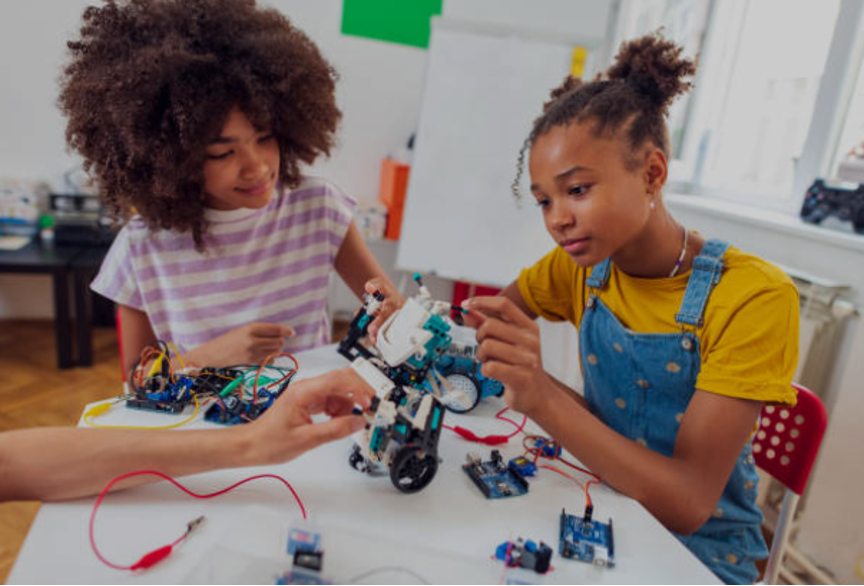
Coding is not just about typing commands into a computer—it’s a language of logic, creativity, and structured thinking. Much like learning a spoken language, coding teaches children how to break problems down, recognise patterns, and develop step-by-step solutions. These skills fall under the broader umbrella of computational thinking, which is the backbone of every software application, game, or digital tool we use.
The Future of Jobs Report by The World Economic Forum reports that 65% of children entering primary school today will work in jobs that do not yet exist. Simultaneously, automation is expected to render 41% of current jobs in South Africa obsolete. Adding to the urgency, South Africa’s unemployment rate stood at a staggering 32.1% in the third quarter of 2024 (Stats SA), while demand for software developers rose by 20% in 2021, with over 1,000 job postings listing coding as a requirement (CareerJunction, 2021).
The message is clear: coding and digital literacy are not optional extras they are survival tools for the future economy.
Education in Crisis: A South African Snapshot
The South African education system faces deeply rooted challenges. It’s reported that the average child in South Africa cannot read for meaning until the age of 10. This foundational gap in literacy, compounded by poor numeracy outcomes, limits children’s future academic and economic prospects. Introducing coding as a playful, engaging, and interdisciplinary learning tool can help reinforce both reading comprehension and math skills from an early age.
However, given the realities of resource constraints and overloaded curricula, creative and informal ways of introducing coding are urgently needed especially outside the formal classroom. Community centres, after-school programs, libraries, and even hospital settings can become spaces where coding is introduced through storytelling, games, and unplugged activities that require no internet or devices.
Computational Thinking vs. Coding
While coding is the tool, computational thinking is the mindset. Teaching kids how to approach a problem computationally through sequencing, pattern recognition, abstraction, and debugging prepares them for a world where technology is embedded in everything. Whether a child grows up to be an artist, doctor, or entrepreneur, computational thinking cultivates resilience, logic, and structured creativity.
The goal isn’t to produce an army of software engineers; it is to develop critical thinkers who can navigate complexity and solve problems with confidence.
Equity and Access: Bridging the Digital Divide
In many parts of the world, particularly in Africa, access to digital tools is a luxury. Seven out of ten South African children still lack access to reliable internet and technology. This digital gap reinforces existing inequalities and denies millions the chance to participate in the future digital economy. Organisations like CodeNgwana which I founded and CEO of, or Tangible Africa led by Professor Jean Greylings that I recently had a sit down with for an HMI strategic dialogue, are working to bridge this divide by developing culturally relevant, low-tech coding content including African language coding storybooks and delivering it in both formal and informal settings.
To Code or Not to Code?
The answer may not lie in choosing between coding and traditional learning, but in integrating both. Coding should not replace storytelling, play, or foundational learning but it can enhance them. Computational thinking nurtures the very skills young children need to thrive in logical reasoning, collaboration, creativity, and confidence.
So, to code or not to code? Given the scale of South Africa’s educational and employment challenges, and the growing demand for digital skills, the real question may be: how can we afford not to? And how do we make coding in South Africa a reality. Let us engage and collaborate on ways on how to make this journey a reality in South Africa. Please feel free to reach out toinfo@codengwana.co.za on how we can amplify this work and bring this work forward.
HMI is a Think Tank of The House Mazibuko Foundation NPC which is a Non Profit Organisation that is funded through generous donations. Please kindly click the below button to be a part of our movement.



Leave A Comment