Algorithms of Outrage: Xenophobia or Afrophobia? The Misplaced Scapegoating of Foreign Academics at SA Universities and Disregard of Harm by Foreign Pastors.
Opinion Article by Dr Tristán Kapp
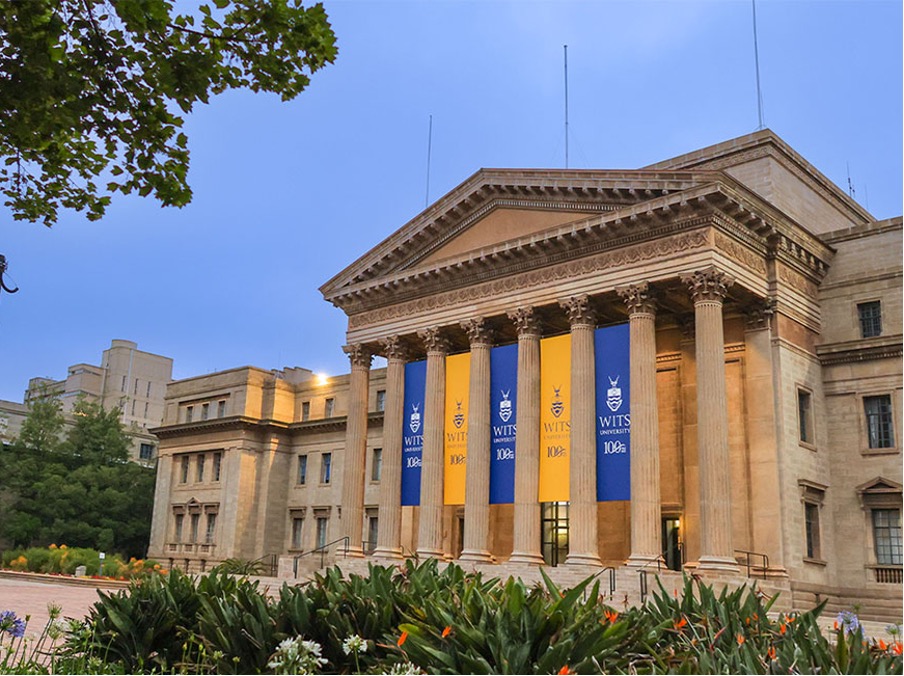
Recently several debates have been circulating amongst South Africans — including a recent Daily Maverick article by professor Sioux McKenna (Director of the Centre for Postgraduate Studies at Rhodes University), titled Xenophobic framing risks shrinking the intellectual horizons of SA’s universities. Simultaneously, on X (formerly Twitter), SABC News Radio broke the story: “Institutions Given Until March 18 to disclose foreign academic staff members.” In their SAFM podcast, First Take SA, Elvis Presslin notes that the African Diaspora Forum has welcomed a parliamentary call for universities to disclose a list of all foreign academic staff numbers.
This call serves as a direct sequel to the initial findings by the Department of Higher Education and Training (DHET) on 18 February 2026, as per TimesLIVE. In presenting to the parliament’s portfolio committee on higher education and training, the department noted foreign academics comprise 7.74% of the total 92.4% local academic workforce. Yet, despite these statistics, afrophobia (as McKenna puts it) still abounds. This is seen where academic due process and fairness is sacrificed at the expense of audi alteram partem when a (foreign) Wits sociology professor is institutionally bullied and gagged for having a “dangerous” opinion online thanks to institutions swaying to mob justice.
All this, while foreign pastors syndicates with fake degrees and unbridled criminal exploitation thrive in South Africa; infiltrating the Department of Home Affairs, purchasing the Good Hope Centre in the City of Cape Town for the church, followed by a Gold Mafia and Money laundering scheme involving the illegal cigarette trade, and a foreign pastor appropriating dozens of UNISA degrees, fraudulently. Despite the Cultural, Religious and Linguistic (CRL) Rights Commission fast-tracking attempts to regulate religion and the abuse of belief since 2025. If we want to talk about foreign exploitation, let’s start with our sacred cows.
Xenophobia or Afrophobia? The Angst Around SA’s Unemployment Crisis
In a 2016 article; Professor of Theology at the University of South Africa (UNISA), Rodney Tshaka, distinguishes “afrophobia” from “xenophobia”, clearly. Tshaka notes that the former (xenophobia), refers to a generalised “fear of the other.” Whereas the latter, afrophobia, is a highly specific fear of a very specific other; namely non-South African blacks. Or as Tshaka puts it: “the black other from north of the Limpopo River…”
He also added, “…Greeks and Bulgarians and others come to South Africa and by virtue of their white skin are seen as contributing. The perception, wrong or right, is that they can be of some benefit, unlike the non-South African black foreigner. For this reason I prefer to speak of Afrophobia instead of xenophobia.” – Rodney Tshaka.
Semantics aside, after numerous scandals involving the University of Fort Hare (UFH) and the University of South Africa (UNISA), there is a widespread suspicion that foreigners are taking South African academic jobs. This feeling is not without merit. South Africa is currently facing a massive unemployment crisis with 7.8 million South Africans remaining unemployed. 57% of this statistic are young graduates, according to Stats SA. While I am not at liberty, within the confines of my expertise, to make comments on the matters of academic employment and the economy.
I believe Sioux McKenna makes a good point:
“SA’s unemployment crisis is real and its pain is acute. The instinct to protect local jobs is necessary…But the framing of the committee’s concerns reveals a conflation of immigration compliance with something…closer to suspicion that foreign academics are a problem. The words ‘misuse’ and ‘bypassing’ imply bad faith on the part of universities, seemingly without evidence.”
Digital Religion, Eudaimonia and X: Where Facts Go to Die and Prejudice Thrives
As a scholar of digital religion and algorithmic conspirituality, I spend an inordinate amount of time on social media. Trying to study how misinformation spreads in echo-chambers and how a disinformation culture shapes outrage, instead of objective engagement. Although ‘rage-baiting’ has been a problem since the dawn of new media; this crisis is currently exacerbated by social media algorithms and AI chatbots spreading disinformation on (for example) Elon Musk’s X-platform. Tailored to increase division via pushing opposition, at the expense of balanced engagement. This, and many others like it (i.e. Meta & TikTok), are the platforms where facts go to die and blanket prejudice thrives. Civil engagement is a farse.
I am currently serving as one of two South African researchers, on the New Religions Scholars advisory boardfor an international research project titled, New Religiosity and the Digital Study of Eudaimonia: Mapping Modern Faith and Human Flourishing. Contributing data on various new religious movements in South Africa and the broader African region.
Funded by the John Templeton Foundation and aided by several international partnerships with Inform UK; The Open University; The Database of Religious History (DRH); The University of British Columbia and featuring collaborators: ContERN (Contemporary Esotericism Research Network) and WSRP (World Religions and Spirituality Project). This specific project aims to create the world’s largest, most collaborative, epistemically diverse, open-access mixed data set on contemporary religion. Developing a framework to enable the exploration of how contemporary religion can contribute to or detract from, personal and societal wellbeing.
In my preliminary research data collection, I have encountered a worrisome silence on the real issue of foreign pastor syndicates (as opposed to foreign academics). Foreign churches have not contributed to the South African job market or economy, since their respective inceptions. Quite the opposite. Their interests have mainly been self-serving, flaunting lives filled with material wealth in the name of spiritual prosperity.
Foreign academics, on the other hand (who are formally affiliated with South African institutions) contribute significantly to South Africa’s economy and Higher Education: every publication, every successful Master’s or Doctoral student, book chapter contribution, or book manuscript contributes a local income. Therefore, if South Africans really cared about “cleaning up our country” (as one X-user told me), we should start addressing the issue of foreign pastors, if we want to address the issue of foreigners at all. But I digress…
The Wits Professor Saga: Xenophobic Witch-hunts against Foreign Academics?
Recently, evidence of this frightful climate surfaced with the disastrously sensationalised case of academic xenophobia surrounding (then) Wits University Sociology HOD: Professor Srila Roy (@ProfSrilaRoy). Roy posted an opinionated sweeping statement to X on 19 February, causing a widespread uproar across the nation. In her reply to a tweet by DailyMaverick reporter Naledi Mashishi (@naledimashishi) defending international staff at local universities.
Srila remarked:
“ESP as South Africans have little ambition, are complacent and have a poor work ethic (take that for your xenophobia that us foreigners are meant to suffer in silence, as we nurture successive generations at university *angry emoji*).”
Under normal circumstances, this would be considered an academic with a “dangerous” opinion (remaining Constitutionally protected speech). Scholars At Risk and Amnesty International have recently released a free 90min course on this subject titled, “Dangerous” Questions, Why Academic Freedom Matters. However, within days, Roy’s face was plastered all over national media and social media, all the way to the international Times of India as her tweet ignited a powder keg. This was after a têt-a-têt with another X-user, Natasha Huckfield (@dramadelinquent) on a completely unrelated issue, got out of hand and Huckfield doxed Roy. Even the most heinous of crime stories in South Africa, often do not receive such sustained and widespread media attention.
Sustained Outrage: Mob Justice and Academic Cancel Culture, the South African Sociological Society
Ironically, the most disturbing part of this saga, is less the subject of Srila’s tweet. But the subsequent reactions, overshadowed by (what distinguished professor of Education at the University of Stellenbosch, Jonathan Jansen, called) “a shameful monument of xenophobia by the chair of the aforementioned portfolio committee” [sic.], and no less the “disgraceful” and “ignorant” [sic.] reaction by the South African Sociological Society – SASA. Furthermore, the political mob justice in operation – mobilising around the speech of a Wits professor.
Despite deleting the tweet, apologising twice (derided by critics accusing it of seeming insincere). Roy even posted her full apology on X; yet still this was not enough. Critics demanded a demotion! Ignoring her consistent publication record as acclaimed feminist critic and decoloniality scholar, lambasting her as “elitist, classist, derogatory, racist, and xenophobic.” The South African Sociological Society also remarked that Roy’s remarks showed “disdain for the ethos of the South African higher education sector and the country as a whole.” In their statement, the Executives & Council scathingly doubled down, which Jansen describes as sociology being “frail” and “fickle” when claiming to “suffer reputational loss when a scholar has an opinion.”
SASA’s Executives & Council maintained,
“…We have noted her retraction without genuine apology on X…lacking rigour, emotion and cause, and as an attempt at face-saving…seen with contempt by the South African academic community and beyond. We demand that Professor Roy recuse herself from the Wits Local Organising Committee (LOC) and all conference-related responsibilities…her membership be suspended and tabled for deliberation at the AGM.”
To make matters worse, everyone and their dog (from student bodies, SASA, to campuses, X-users, and the chair of the DHET portfolio committee, Tebogo Letsie, himself) decided demotion was not enough. Almost univocally they all started lobbying for Roy’s immediate dismissal. Pressuring the University of the Witwatersrand to act without the necessary fairness guaranteed by due process and the legal maxim, audi alteram partem (let the other side be heard). Instead, Roy was pressured into voluntary resignation as HOD of the Department Sociology and ushered into temporary suspension. This is nothing shy of the ‘academic cancel culture’ we saw at the University of Cape Town, reported by DailyMaverick in 2024.
Professor Jonathan Jansen: “We’re Skating on Thin Ice”
In his profound analysis of the issue, published in TimesLIVE. Jansen further notes this as one of a number of hypocrisies emanating from this saga:
Tebogo Letsie (who called for Roy’s dismissal) was involved in a previous hearing, accusing Wits of being untransformed, after he discovered that its registrar is white. In addition to Letsie’s frivolous witch-hunt of foreign academics who dare occupy University positions in South Africa. Contrary to widespread assumptions, Roy’s sentiment did not specify race. If anything, she simply echoed the remarks of Gwede Mantashe in January 2026, who also came under fire for implying unemployed South Africans are lazy. Why was there no similar outrage, calling for the ‘cancelling’ of Mantashe? After all, Mantashe was embroiled in a Bosasa corruption scandal; after the Zondo commission of inquiry into state capture, had reasonable suspicion over his involvement and relationships with Bosasa, in 2022. Surely, logic thus dictates that a corrupt ANC top-official deserves such outrage?
On that note, where are the local senior officials at UNISA who suspended a series of whistle-blowers? Who tried to expose financial malfeasance and irregularities at the university. What happened to said officials who approved a R500,000 gala dinner in Cape Town, on the University’s budget for 10 top ANC officials? Where are these officials now?
On my own blog, I reflect more in-depth on this hypocritical scapegoating of foreign academics and the dangers of academic cancel culture (featuring prof Srila Roy). Instead of focusing on South Africa’s institutional irregularities and bureaucratic inconsistencies that affect local academics, graduate jobseekers, and students combined. These are the noble issues, Mr Letsie should be focusing on. Not playing political slight of hand with populist red-herrings, McCarthyist temptations, and afrophobic demagoguery. Again, if we want to talk about foreigners in South Africa who are forming criminal syndicates, stealing jobs, and exploiting locals: we should not be scrutinising academia, but religion.
Shepherd Bushiri & Timothy Omotosho: Pastors in Crime
In late February 2026, the Special Investigating Unit (SIU) exposed a “deeply entrenched corruption network” within the Department of Home Affairs. The probe, implicating the infamous Malawian prophet and fugitive Shepherd Bushiri and the infamous Nigerian convicted sex-offender and human trafficking pastor, Timothy Omotosho; revealed that these foreign pastor syndicates facilitated the issuance of over 2,000 fraudulent study visas and document manipulation via irregular means.
John Anosike: The Good Hope Bargain
At the tail-end of February, while this scandal around Wits professor Srila Roy and foreign academics was still raging, Rebecca Davis and DailyMaverick reported on the “new” Nigerian pastor in town (who also leads a charismatic church in Maitland); John Anosike, who bought the famous Good Hope Centre, following a City-owned property auction by the City of Cape Town, for a whopping R135-million. This purchase, which is considered a ‘steal’ was first identified by the Daily Voice who picked up on a Facebook post by Anosike’s fellow pastor at Spirit Revelation Ecclesia (est. 2010), Thelma Lewis, declaring February “the month of victory.”
Despite this celebration, nobody seemed to have raised an eyebrow over the fact that a foreign pastor from Nigeria was purchasing a heritage site in Cape Town. Was I missing something? Everyone seemed hell-bent on 7.7% foreigners allegedly taking South African academic jobs, these last few weeks, but no-one makes noise about foreign Pentecostal Charismatic and Evangelical (PCE) or “megacostal” pastors…
Uebert Angel: Gold Mafia & Money Laundering
Nobody expressed outrage at the Zimbabwean gold smuggling and money laundering pastor Uebert Angel, who frequents the prominent South African Encounter Christian Church (ECC) by Leon du Preez. In 2023, Al Jazeera reported on Uebert Angel as one of Zimbabwe’s senior diplomats, being involved in a gold smuggling scheme in South Africa (since 2020) – offering undercover reporters diplomatic cover to launder over $1bn (USD) in cash. However, Angel did not act alone and, in the 4 Episode YouTube documentary series by Al Jazeera, his associates were the directors of Gold Leaf Tobacco Corporation (GLTC); Simon Rudland and Ebrahim Adamjee – exposed by Corruption Watch in 2024 as responsible for at least R8.2-billion in untaxed funds, snuck out of South Africa within a decade. Despite this, Uebert Angel is the founder of the Spirit Embassy Church in Johannesburg that continues to preach every Sunday at 10:30am sharp.
Walter Magaya: PHD Ministries but Fake UNISA Theology Degrees
Another instance from January 2025, reported by University World News (Africa Edition), which seemed to have escaped the radar in South Africa: is the case of the Zimbabwean church founder, Walter Magaya, of Prophetic Healing and Deliverance (PHD) Ministries. Magaya claimed he earned several diplomas as well as a PhD from the University of South Africa (UNISA), a fraudulent statement which UNISA took legal action against him for, after bringing the University into disrepute. Another worthy cause combining both academic fraud and religious exploitation, ignored by social media algorithms?
Regulation of Religion in South Africa: 11 years and counting…
This is especially alarming in our current social climate since late 2025 and now early 2026, considering the fact that South African Churches (represented by Freedom of Religion SA (FORSA) and the African Christian Democratic Party (ACDP) are mobilising against the Commission for the Promotion and Protection of Cultural, Religious, and Linguistic communities, (in short, “the CRL Rights Commission”); caught in a perpetual arm wrestling over the independent versus self-regulation of churches, via the Section 22 Ad Hoc committee on the regulation of religion for the Christian Sector, in South Africa.
Since 2017, the CRL Rights commission has made clear its intentions to regulate the religious sector in South Africa, following its Report of the 2015-2016 hearings on the commercialisation of religion and abuse of people’s belief systems. The findings of this investigation were subsequently presented to the Portfolio Committee on Cooperative Governance and Traditional Affairs (CoGTA), which held discussions with a diverse array of religious leaders, resulting in a set of significant recommendations in 2018.
In response to the 2018 recommendations of the CoGTA Portfolio Committee, the Section 22 Ad Hoc Committee was formed in mid-2025, under leadership of professor Musa Xulu. The committee – comprising of Christian religious leaders from various umbrella organisations, including, inter alia, mainline, independent, charismatic, and Pentecostal churches; was inaugurated at the infamous Rhema Bible Church in late 2025.
Section 22 Committee Inaugurated at Rhema Bible Church: Bank Robbers Unveiling Bank Security Systems
Featuring many of the very same foreign (and local) churches and denominations that exploit and harm congregants. Ostensibly, the CRL Rights Commission is expecting bank robbers to design a bank security system to regulate the bank robbing profession, on their behalf. Ironically enough, the CRL Rights Commision Chair, noted in an interview with eNCA on 25 February 2026, in response to the SIU report laying bare the corruption at the DHA:
“…without a professional body, corruption was bound to continue in the religious sector. Our proposal has always been a peer review mechanism where they themselves will control what happens in the religious sector…An urgent vetting and registration of all religious leaders in the country was needed. A paedophile can open a church tomorrow. People mustn’t just come into the country and decide to be a religious leader…people who have access to children must be vetted. How are we supposed to do that when we don’t know who you are and where you come from,” – Thoko Mkhwanazi-Xaluva.
aQuellé – The Case of KwaSizabantu Faith Mission: Erika Bornman
Nevertheless, the CRL Rights Commission has launched investigations into several cases of church abuse; ranging from foreign Pastors who force their congregants to ingest a variety of questionable and dangerous substances, to local cases such as the human rights abuses at KwaSizabantu Faith Mission (est. 1970). Erika Bornmann elaborates on the horrors at KSB, in her book – “Mission of Malice: My Exodus from KwaSizabantu.”
Throughout 2020, News24 published a seven-month investigation titled Exodus, uncovering allegations of human rights abuses, sexual assault, and financial misconduct at the KwaSizabantu Mission in KwaZulu-Natal. As of late 2025, the religious watchdog (CRL Rights Commission) has faced criticism and legal challenges for pulling its report that had initially investigated the mission’s alleged abuses. It also came out that the Mission owned the popular aQuellé water spring, played a significant role in diverting funds to silence whistleblowers.
The Prophet of Doom – Money and Manipulation: Nicky Falkof
Another book published in 2025, by professor Nicky Falkof titled, The Devil Made Me Do It: Understanding South Africa’s Occult-related Crime; supports this. Falkof elaborates in excruciating detail on several crimes committed by both local and foreign Christian pastors in Chapter 6 of the book – “The prophet of Doom: Money and manipulation.” Highlighting the CRL Rights Commission and justice system’s struggle (and occasional victories) in the prevention of harmful and exploitative religious practices. You can read the summary published on The Conversation Africa.
Democracy, Pentecostalism and Deconstruction: Pontsho Pilane
Another notable voice in this saga of Pentecostal pastors and their abusive tactics is the award-winning journalist, lecturer and writer; Pontsho Pilane. Who wrote the book – Power and Faith: How Evangelical Churches are Quietly Shaping Our Democracy. In which she criticises the regulation of the Pentecostal church movement through highlighting her own experiences and deconstructions, leading to her investigating the dangers of uninterrogated belief in Pentecostal churches and how these beliefs affect our everyday lives.
Foreign Academics versus Foreign Pastor Syndicates
Universities (globally) are suffering due to a lack of internationalisation; departments close – local scholars get fired with a golden handshake, and certain programmes cannot be sustained anymore. This is especially notable in the UK (and broader Europe), where universities are closing departments, cutting thousands of jobs, and facing severe financial crises, driven by a 52% drop in the attraction of international talent, since 2021. South Africa, therefore, should count itself lucky with the strong attraction of international talent that our institutions have been able to maintain.
Yes, there are opportunists who abuse the system, such as the fake degree syndicates at the University of Fort Hare (UFH) implicating several high-ranking officials in the Eastern Cape, including Premier Oscar Mabuyane, Transport MEC Xolile Nqatha, and former Health MEC Sindiswa Gomba. Including the central figure, professor Edwin Ijeoma (former UFH Dean) who used a fake master’s degree from a non-accredited institution to obtain his own PhD from the University of Pretoria (UP). Blaming foreigners for local academic oversight, is irresponsible.
If we truly want to get rid of the economic dead weight in a “South Africa for South Africans”-mindset. We should start scrutinising foreign preachers who prey on the vulnerable and innocent by regulating religion in South Africa: exploiting them emotionally, financially, sexually, and sometimes physically. By establishing an independent regulatory body, consisting of local experts (vetted by the DHET) and NGOs – a sort-of HPCSA for the South African religious sector, we can stop foreign pastor syndicates from bleeding our country dry.Consequently, the DHET can then cease their mala fides intimidation of local Universities against its 7.7% contributing foreign academic workforce. Unfairly scapegoated by a parliamentary witch hunt. Similarly, forgive Srila Roy, whose professional reputation was unfairly tarnished by an angry online mob, in the heat of a single flustered tweet posted in self-defence. If we rage on about these ostensible non-issues at the expense of academic freedom, while ignoring the more pressing issues involving foreign prophets for profit and syndicate pastors in our midst. We risk veering into dangerous anti-intellectualist territory, as seen in the warnings in the 1964 work of historian, Richard Hofstadter: Anti-Intellectualism in American Life.
HMI is a Think Tank of The House Mazibuko Foundation NPC which is a Non Profit Organisation that is funded through generous donations. Please kindly click the below button to be a part of our movement.
